Why Does My Cat Meow at Night? 6 Reasons and How to Help
It is 3am. You are fast asleep. And somewhere in the house, a small furry opera singer has decided now is the moment for a heartfelt solo. Here is why, and how to reclaim your nights.
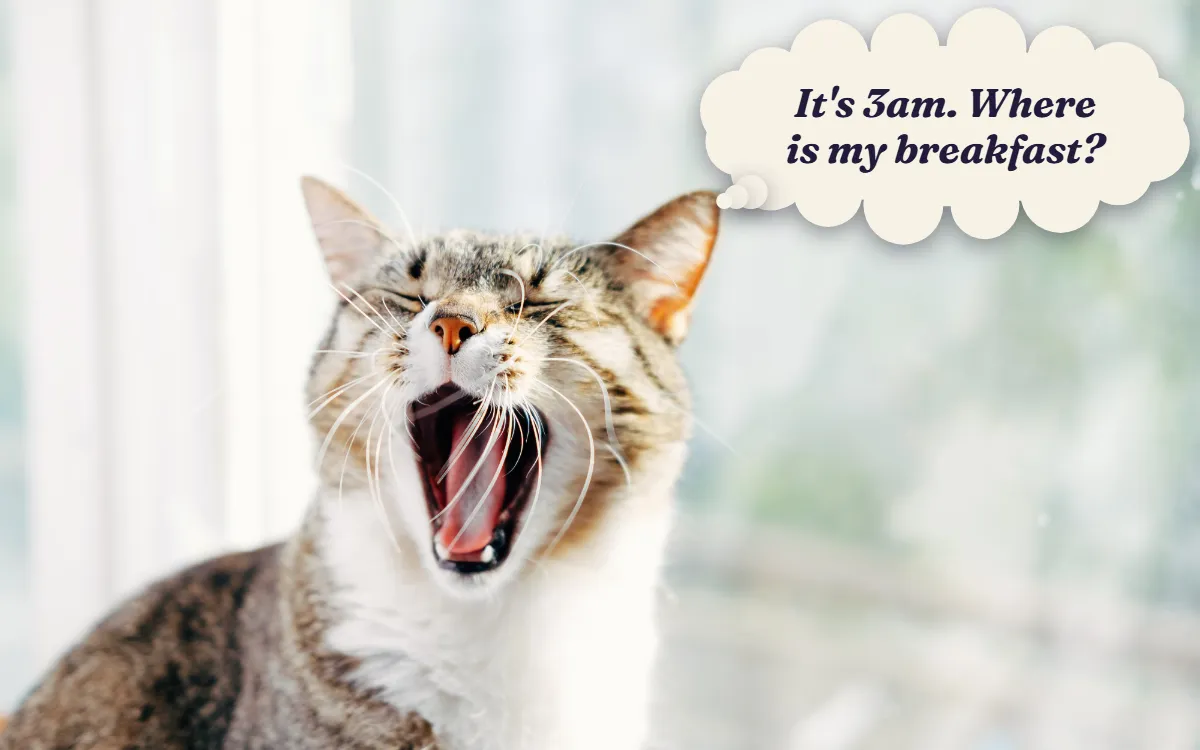
Cats meow at night for six main reasons: hunger, boredom or loneliness, attention-seeking, their natural dawn-and-dusk activity, a desire to get outside, and underlying illness, which is especially common in older cats. Ruling out health issues comes first, then addressing needs and routine usually settles the night-time chorus.
1. They are hungry, or expecting food
One of the most common reasons for night-time meowing is simple: your cat is hungry, or has learned that meowing at night produces breakfast. Cats have small stomachs and a natural pattern of eating little and often, so a long overnight gap without food can leave them genuinely peckish by the small hours. If they have ever been fed in response to early-morning yowling, they will have filed that away as a winning strategy and will repeat it nightly.
The fix is to offer a meal late in the evening so they are not running on empty overnight, and to consider a timed automatic feeder that dispenses a small portion in the early hours. Crucially, avoid getting up to feed them when they cry, as that only reinforces the behaviour. Wondering what your cat is really asking for? You can scan your cat free and get a read on their mood in about ten seconds.
2. They are bored or under-stimulated
A cat who sleeps and lounges all day may simply have too much unspent energy come nightfall. Indoor cats in particular can struggle if their days are not enriched, and a bored cat will happily fill the quiet night hours by demanding entertainment from the nearest human, namely you.
The answer is to enrich the daytime and, most importantly, to have a good play session in the evening. A vigorous game with a wand toy that lets them stalk, chase and pounce, followed by a meal, mimics the natural hunt-eat-groom-sleep cycle and helps a cat wind down properly for the night. A tired, satisfied cat is a quiet cat.
3. They want your attention
Cats are smart, social and very good at training their owners. If meowing at night has ever earned a response, whether food, a stroke, a cuddle or even just being told off, your cat has learned that vocalising gets a reaction. To a cat seeking company, even negative attention is still attention, so a grumbled go back to sleep can inadvertently reward the very behaviour you want to stop.
The kindest and most effective approach for pure attention-seeking is calm, consistent ignoring, provided you have already ruled out genuine needs. This is hard, and it often gets briefly worse before it gets better as your cat tries harder to get the old result. But consistency is everything. If you cave even occasionally, you teach them that persistence pays, and the night concerts continue.
4. They are naturally active at dawn and dusk
Cats are crepuscular, meaning they are naturally most active around dawn and dusk. This is hardwired from their wild ancestry, when those low-light hours were prime hunting time. So your cat waking and becoming lively in the early morning is not defiance, it is instinct. Their internal clock is telling them this is when the world comes alive.
You cannot rewire a cat's biology, but you can work with it. Shifting their big play session and main meal to later in the evening helps push their active window and encourages sleep through more of the night. Blackout curtains can also help, as early light streaming in is a classic trigger for that dawn wake-up call and the meowing that comes with it.
5. They want to get outside
If your cat has access to outdoors, or wants it, night can bring a strong urge to roam, hunt and patrol their territory, and they may vocalise loudly at the door demanding to be let out or back in. Unneutered cats are especially prone to this, as the drive to find mates makes them restless and vocal, so neutering is an important first step for any cat still calling at night.
For safety, many owners keep cats in overnight, as nights carry higher risks from traffic and other hazards. If that is your choice, providing plenty of indoor enrichment, climbing spaces, window perches and play helps satisfy the roaming instinct indoors and reduces the frustrated pleading at the door.
6. They are unwell, especially older cats
This is the reason never to overlook, particularly if the night-time meowing is new, sudden or intense. Increased vocalising, especially at night, can be a genuine sign of illness. In older cats it is a classic symptom worth taking seriously, and several conditions are known to cause it:
- Hyperthyroidism, an overactive thyroid, which is common in senior cats and often causes restlessness, weight loss and increased appetite and thirst
- High blood pressure, which can cause distress and disorientation
- Kidney disease and other chronic illnesses
- Pain, such as from arthritis, which many older cats hide well
- Feline cognitive dysfunction, a dementia-like condition where cats become confused, especially at night, and may yowl as if lost
If your cat's night-time meowing has appeared out of nowhere, has changed in character, or comes with any other signs such as weight loss, increased thirst, hiding or disorientation, please book a vet visit before assuming it is behavioural. Ruling out a medical cause always comes first, and catching these conditions early makes them far easier to manage. Once your cat has a clean bill of health, the routine and enrichment tips above will help bring back your peaceful nights. Curious what is on your cat's mind in the small hours? Scan your cat free and find out.
Frequently asked questions
Why does my cat meow at night all of a sudden?
Sudden night-time meowing in a cat that was previously quiet is worth attention, especially in an older cat. It can signal a health problem such as an overactive thyroid, high blood pressure, pain or feline cognitive dysfunction. A change in routine or stress can also trigger it, so a vet check is the sensible first step.
Should I ignore my cat meowing at night?
For attention-seeking meowing, yes, ignoring it consistently is usually the right approach, because responding teaches your cat that meowing works. The key is to be completely consistent, as giving in occasionally makes it worse. First, though, rule out genuine needs like hunger, a dirty litter tray or illness.
How do I stop my cat meowing at night?
Tire them out with play before bed, feed a meal late in the evening, and make sure food, water and a clean litter tray are available overnight. Keep the daytime enriched so they sleep at night, and avoid rewarding night meowing with food or attention. If it is sudden or in a senior cat, see a vet first.
Is my cat meowing at night a sign of illness?
It can be, particularly in older cats. Conditions like hyperthyroidism, high blood pressure, kidney disease, pain and cognitive dysfunction can all cause increased night-time vocalising. If the meowing is new, intense, or comes with weight loss, increased thirst or disorientation, book a vet visit.
Stop guessing. Find out what your pet is really thinking.
Our free AI Pet Mind Reader reads their face and tells you what is going on in there - in about 10 seconds, no sign-up.
Scan my pet free