Why Does My Cat Knead Me? The Sweet Truth Behind Making Biscuits
Paw, paw, paw, purr. Your cat settles on your lap and starts pummelling you like a tiny furry baker. Adorable, slightly painful, and packed with meaning.
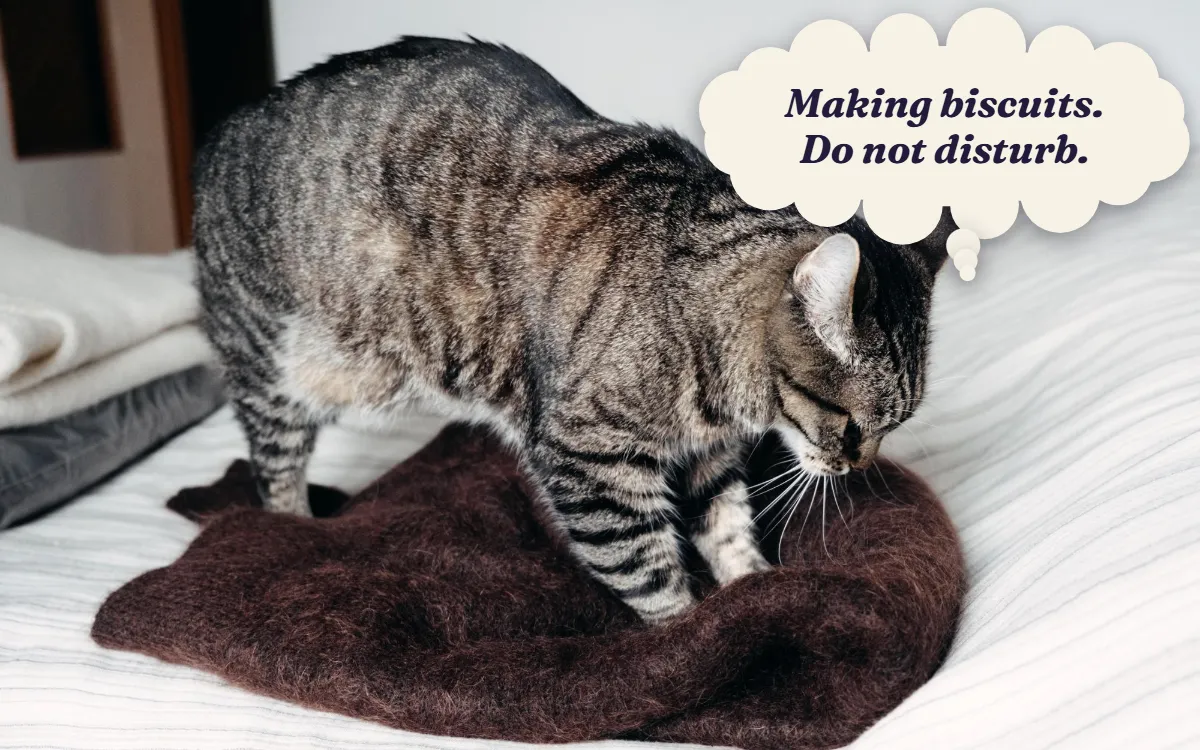
Cats knead you because it is a deeply comforting behaviour carried over from kittenhood, when they kneaded their mother to stimulate milk. In adult cats, making biscuits signals contentment, relaxation and trust. It also lets them mark you with scent from glands in their paws, claiming you as safe and familiar.
What does making biscuits actually mean?
Kneading, affectionately called making biscuits because it looks like a cat working dough, is the rhythmic pushing of the front paws against a soft surface, often alternating left and right. It is one of the most common and most charming things cats do, and it almost always means your cat is feeling good. A kneading cat is a cat who is comfortable, calm and at ease in the moment.
You will usually see it when your cat is settling down to relax, curling up for a nap, or snuggling into a warm lap. It tends to come as part of a little bundle of contentment: kneading, purring, half-closed eyes and a soft, loose body. If you would like to know what is going on behind those blissed-out eyes, you can scan your cat free and find out in seconds.
Why do cats knead? The kittenhood connection
The most widely accepted explanation goes right back to the very start of a cat's life. Nursing kittens knead their mother's belly with their paws to stimulate the flow of milk. It is one of the first things a kitten ever does, and it is strongly linked with warmth, comfort, safety and a full tummy.
Because that early experience is so positive, many cats carry the behaviour into adulthood. When your grown cat kneads a soft blanket or your lap, they are tapping into that deep, soothing, kittenish feeling of being safe and cared for. Some cats even drool a little or suckle at fabric while they knead, which is that infant memory surfacing in full. It is one of the reasons a kneading cat looks so utterly content.
Is my cat marking me when they knead?
Yes, and this is one of the more underrated reasons. Cats have scent glands in the pads of their paws, and kneading presses those glands against whatever they are working, releasing their personal scent. To a cat, scent is everything. It is how they map their world and label what belongs to their group.
So when your cat kneads your lap, they are not only getting comfortable, they are quietly signing their name on you. They are saying this human is mine, this human is safe, this human smells like home. It is a subtle but genuine compliment, and it is part of how cats build a sense of a shared, secure territory with the people they trust.
Why does my cat knead me specifically?
If your cat saves their kneading for you, take it as a real vote of confidence. Cats knead where they feel safest and most relaxed, and choosing your lap over the sofa, the bed or a cushion means you rank highly in their world. There are a few likely reasons you are the chosen dough:
- You are warm, and warmth triggers that cosy, nap-ready feeling
- You are soft and yielding, which feels good under the paws
- You smell familiar and safe, which invites the comfort behaviour
- They have learned that settling on you comes with attention and affection
Some cats also knead as a way to make a nest before sleeping, an instinct thought to date back to wild ancestors patting down grass or leaves into a comfortable, safe bed. On your lap, that ancient nesting instinct simply means you have been chosen as the perfect spot.
Why does kneading sometimes hurt, and can I stop it?
Here is the catch with all this cosiness: claws. Many cats extend their claws slightly as they knead, especially the more enthusiastic bakers, and a happy kneading session on a bare lap can leave you wincing. The important thing to know is that your cat is not being aggressive or trying to hurt you. The claws are simply part of the instinctive motion.
Because kneading is such a positive, comforting behaviour, the last thing you want to do is punish it or push your cat away sharply, as that can confuse and upset them. Instead, work with it:
- Keep your cat's claws trimmed and blunt with regular gentle nail care
- Keep a thick blanket or folded cushion handy to lay over your lap as a buffer
- Gently guide your cat onto a soft surface beside you if the paws get too much
- Never shout or use water sprays, which damage trust for something they cannot help
With a little padding and patience, you can enjoy the biscuit-making without the puncture wounds. It is one of the sweetest things your cat does, so it is well worth accommodating. Want to know what your cat is really feeling when they knead? Scan your cat free and get their thoughts in about ten seconds.
Frequently asked questions
Why does my cat knead me and purr?
Kneading paired with purring is one of the clearest signs of a happy, contented cat. Both behaviours trace back to kittenhood, when nursing kittens knead and purr at their mother. When your adult cat does it on you, they are relaxed, comforted and treating you as a source of safety and warmth.
Does kneading mean my cat loves me?
In a feline way, yes. Cats knead where they feel safe and content, and choosing to knead on you is a strong sign of trust and comfort. They are also depositing their scent from glands in their paws, marking you as familiar and part of their world.
Why does my cat knead me then bite me?
A gentle bite or nibble during kneading is usually part of a happy, kitten-like bundle of comfort behaviours, sometimes alongside suckling at fabric. If the bite is hard or the body stiffens, your cat may have tipped into overstimulation, so pause and give them a break.
How do I stop my cat's kneading from hurting?
Never punish it, as kneading is instinctive and comforting. Instead keep claws trimmed, lay a thick blanket or cushion on your lap as a buffer, and gently redirect your cat onto a soft surface. Over time you can teach them a comfier spot without stopping the behaviour they love.
Stop guessing. Find out what your pet is really thinking.
Our free AI Pet Mind Reader reads their face and tells you what is going on in there - in about 10 seconds, no sign-up.
Scan my pet free