Why Does My Cat Headbutt Me? Decoding the Head Bump
You lean in and your cat gently but firmly bonks their forehead against yours. It is oddly touching, a little funny, and one of the sweetest signals in the whole feline language.
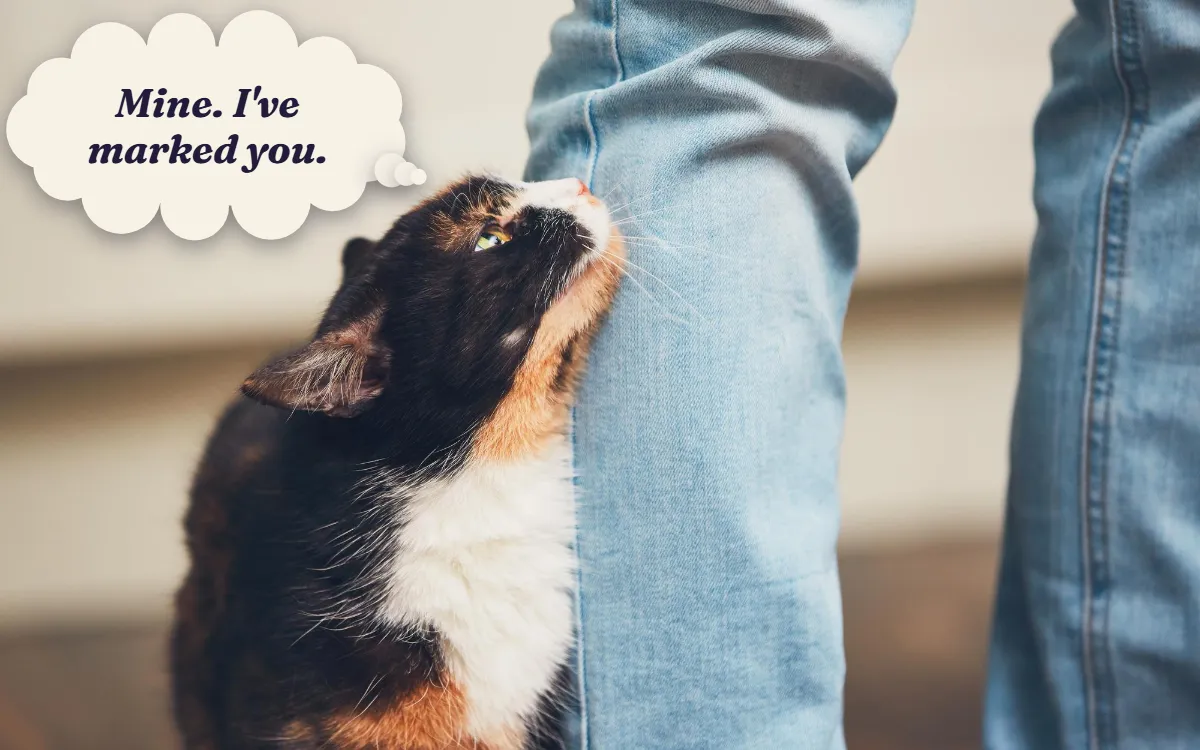
Cats headbutt you, a behaviour properly called bunting, as a sign of affection, trust and scent marking. Cats have scent glands on their face, and rubbing them against you deposits their personal scent, claiming you as safe and part of their group. A head bump is one of the clearest ways a cat says they love and trust you.
What is bunting, and why do cats do it?
That gentle head bump has a proper name: bunting. It describes the way a cat pushes or rubs the front and sides of their head against a person, another animal or an object. It is an entirely friendly, affectionate behaviour, and it is loaded with meaning in the feline world. When your cat bunts you, they are doing something they would only do with someone they trust and feel safe around.
The driving force behind bunting is scent. Cats have scent glands concentrated around their face, on the cheeks, chin, lips and forehead. When they rub these against you, they leave behind their own personal scent, invisible to us but hugely significant to them. Curious what is behind that little bonk? You can scan your cat free and get a read on their mood in about ten seconds.
Is my cat marking me as their own?
In the nicest possible way, yes. To a cat, scent is identity and belonging. Cats within a friendly social group share a communal scent by rubbing on each other and on shared surfaces, creating a group smell that says, we are family, we belong together, this is safe. It is one of the fundamental ways cats build and maintain their bonds.
When your cat headbutts you, they are folding you into that shared-scent family. They are taking their smell and blending it with yours, effectively labelling you as one of their own. It is a quiet but profound compliment. Far from marking you as property in a cold sense, your cat is saying you smell like home now, and I want to keep it that way.
Does headbutting mean my cat trusts me?
Absolutely. The head is a vulnerable part of the body, and a cat who deliberately presents and rubs their head against you is showing they feel completely at ease. A nervous or wary cat does not offer up their face for a bunt. So bunting is not just affection, it is a statement of security and trust. Your cat is relaxed enough to lower their guard and connect.
You will often see bunting come with other happy signals that confirm the mood:
- A gently raised, upright tail, sometimes with a little quiver at the tip
- Purring or soft chirps and trills as a greeting
- Slow blinking and soft, relaxed eyes
- Winding around your legs or rubbing their whole body along you
Put together, this is a cat greeting their favourite human with warmth and confidence. It is about as clear a love letter as a cat is likely to write.
Why does my cat headbutt me then wander off?
This one puzzles a lot of owners. Your cat delivers an affectionate bunt, you go all soft, and then they simply stroll away as if nothing happened. It can feel like a snub, but it really is not. Your cat has done exactly what they set out to do: greeted you, marked you and reconnected. Once that little ritual is complete, they may just move on to whatever is next on their agenda.
Cats do not linger over greetings the way we might expect. The head bump was the message, and having delivered it, they are content. It does not mean they have lost interest in you or that the affection was shallow. It means they said their piece in fluent cat and are now happily getting on with their day.
Headbutt versus head press: the vital difference
This is the one part of the article to read carefully, because two things that sound similar are worlds apart. A headbutt, or bunt, is affectionate, gentle and comes from a relaxed, happy cat rubbing their face against you. It is entirely normal and lovely.
Head pressing is completely different and is a genuine medical emergency. Head pressing is when a cat pushes the top of their head firmly and repeatedly against a wall, a piece of furniture or a hard object, and holds it there, often for no clear reason and with a dull, distressed demeanour. It is not affectionate and not directed at you as a greeting. Head pressing can be a sign of a serious neurological problem, poisoning or other severe illness, and it warrants an urgent trip to the vet. The key differences:
- Bunting is aimed at you or another pet, gentle, and paired with happy signals
- Head pressing is aimed at walls or objects, forceful and sustained, with the cat seeming unwell or distressed
- Bunting is a greeting, head pressing is a red flag
So enjoy every affectionate bunt for the compliment it is, but if you ever see your cat standing with their head jammed against the wall looking wrong, do not wait, call your vet. For the everyday happy head bump, though, it is pure feline love. Want to know what your cat is feeling when they greet you? Scan your cat free and find out.
Frequently asked questions
What does it mean when a cat headbutts you?
A cat headbutt, properly called bunting, is a sign of affection and trust. Cats have scent glands on their face and rub them against you to deposit their scent, marking you as safe and part of their group. It is one of the clearest ways a cat says they like you and feel comfortable around you.
Is a cat headbutt a sign of love?
Yes. Bunting is a friendly, bonding behaviour that cats reserve for those they trust. By marking you with their facial scent, your cat is claiming you as family and blending your smell with theirs. A relaxed cat who headbutts you is showing genuine affection and security.
What is the difference between headbutting and head pressing?
They are completely different. A headbutt or bunt is a gentle, affectionate rub of the face against you, done by a relaxed, happy cat. Head pressing is when a cat pushes their head hard against a wall or object and holds it there, which is a medical emergency needing an urgent vet visit.
Why does my cat headbutt me then walk away?
That is perfectly normal cat behaviour. Your cat has delivered their affectionate scent mark and greeting, and once that is done they may simply move on to the next thing. It does not mean they have lost interest in you, just that they have said their hello in cat and are content.
Stop guessing. Find out what your pet is really thinking.
Our free AI Pet Mind Reader reads their face and tells you what is going on in there - in about 10 seconds, no sign-up.
Scan my pet free