Why Does My Cat Bite Me Then Lick Me?
One second they are gently gnawing your hand, the next they are licking the same spot like they are apologising. Sweet, confusing, and occasionally a bit sharp. Let's decode the bite-then-lick.
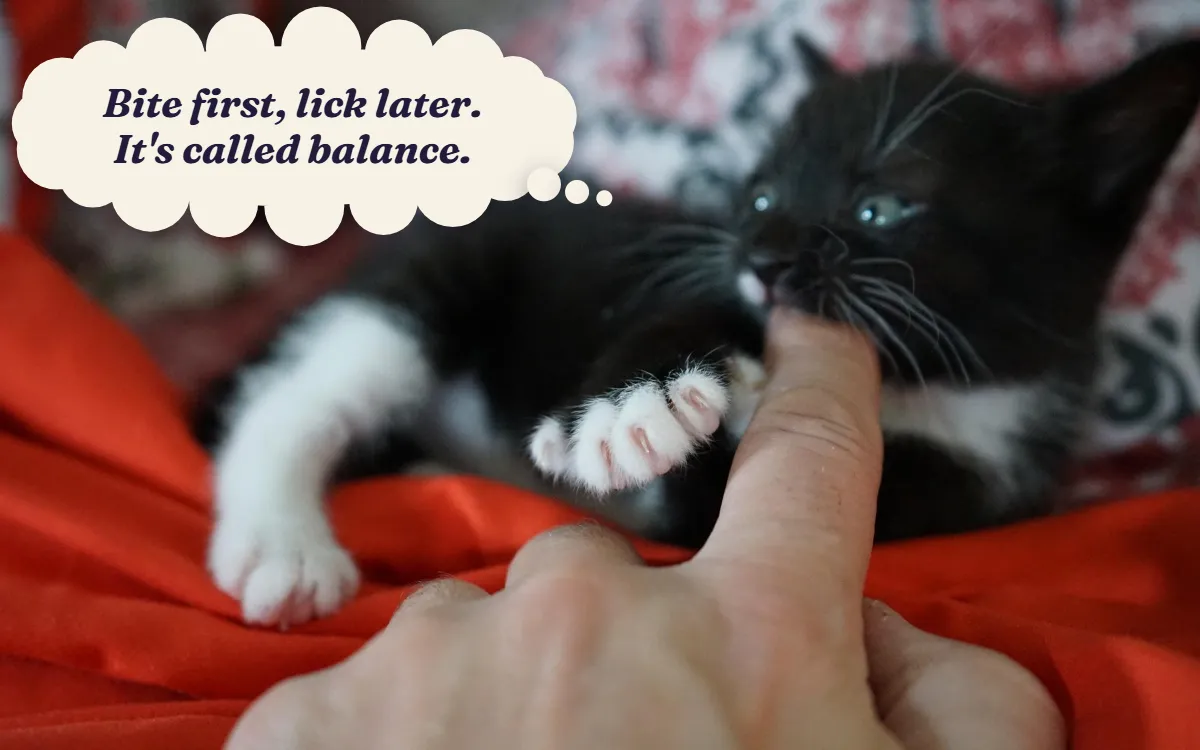
Cats bite then lick you mostly as a form of social grooming and affection, treating you like a fellow cat. This mix of gentle nibbling and licking, called allogrooming, is normal bonding behaviour. As long as the bites are soft and the body is relaxed, they are love bites. Hard biting with a tense body signals overstimulation instead.
Is the bite-then-lick a sign of affection?
In most cases, yes, and it is one of the more misunderstood things cats do. When cats who like each other spend time together, they groom one another using a combination of licking and gentle nibbling. This is called allogrooming, and it is a core part of how cats build and maintain bonds within their social group. The little nibbles help work through fur and knots, and the licking soothes and cleans.
When your cat does this to you, they are extending that same social ritual to you. In their eyes, you are part of their group, and grooming you is both an affectionate and a bonding act. The nibble is not an attack, it is a natural part of the grooming sequence. Curious what your cat is really feeling in these moments? You can scan your cat free and find out in about ten seconds.
What is a love bite, really?
A love bite is a gentle, controlled mouthing that does not break the skin or cause real pain. Cats have very precise control over their bite, and a true love bite is deliberately soft. It often comes bundled with other clear signs of contentment, which is how you tell it apart from a genuine warning. Look for the full picture:
- A relaxed, loose body rather than a stiff, tense one
- Purring, slow blinking or half-closed eyes
- Kneading paws or a softly curled posture
- Licking before or after the nibble, as part of grooming you
When those signs are present, the bite is affection, plain and simple. Your cat is treating you the way they would a trusted feline companion. It can still catch you off guard, but it is a compliment rather than a complaint.
Why does my cat bite while I am stroking them?
Here is the flip side, and it is the reason so many owners feel their cat is unpredictable. Sometimes a cat will be enjoying a stroke, then suddenly turn and bite. This is often overstimulation, sometimes called petting-induced aggression, and it is genuinely common. It does not mean your cat is nasty or has stopped loving you. It means they have reached their limit.
Cats have a threshold for physical contact, and some have a fairly low one. Repeated stroking, particularly along the back, near the base of the tail or on the belly, can build up until pleasant sensation tips into too much. At that point the bite is a clear message: that is enough now, thank you. The good news is that cats almost always warn you first, if you know what to look for.
How do I read the warning signs before a bite?
Overstimulation bites feel sudden to us because we miss the earlier signals. Cats are usually broadcasting their rising discomfort well before teeth come into it. Learn to watch for these, and you can stop stroking at the right moment:
- A tail that starts twitching, flicking or thumping
- Skin along the back that ripples or twitches
- Ears that flatten, rotate back or go into aeroplane position
- A sudden stillness or tensing of the body
- The head turning sharply toward your hand
- Dilated pupils or a low growl
When you see any of these, pause. Lift your hand away and give your cat a moment. Respecting these signals is one of the fastest ways to build trust, because your cat learns that you listen, and they no longer feel the need to escalate to a bite to be heard.
Could biting mean something is wrong?
Usually the bite-then-lick is harmless, but a few patterns are worth attention. If your normally gentle cat suddenly starts biting more, reacts badly to being touched in a particular spot, or seems irritable and off, it is worth a vet check. Pain from arthritis, dental disease, skin conditions or injury can make a cat lash out when touched near a sore area, and they have no other way to tell you it hurts.
It is also worth being honest about how we play with cats. Using your hands or fingers as toys when they are kittens teaches them that human skin is fair game for biting. If that is a habit in your home, switch to wand toys and kickeroos so your cat has something proper to bite, and your hands stay off the menu. Want to understand what is behind your cat's biting in particular? Scan your cat free and get a read on their mood in seconds.
Frequently asked questions
Why does my cat bite me then lick me?
Usually it is affectionate grooming and social bonding. Cats groom each other with a mix of gentle nibbles and licks, called allogrooming, and your cat is treating you like a fellow cat. A soft nibble followed by licking is normally a love bite, not aggression, as long as the body stays relaxed.
Are love bites from cats a sign of affection?
Often yes. Gentle, non-painful nibbles paired with licking, purring and a relaxed body are a form of affection and grooming that cats share with those they trust. The key is intensity. A soft mouthing is love, while a hard bite with a stiff body and flat ears is a request to stop.
Why does my cat bite me while I am stroking them?
That is often overstimulation, sometimes called petting-induced aggression. Repeated stroking, especially near the belly or base of the tail, can tip a cat from enjoyment into overload, and the bite says enough now. Watch for a twitching tail, rippling skin, flattening ears and a turn of the head as early warnings.
How do I stop my cat biting me?
Learn their warning signs and stop stroking before they reach their limit, keep sessions short, and never use your hands as toys. If a bite happens, calmly withdraw attention rather than shouting or pushing back. Redirect play onto wand toys, and see a vet if biting is sudden or paired with pain.
Stop guessing. Find out what your pet is really thinking.
Our free AI Pet Mind Reader reads their face and tells you what is going on in there - in about 10 seconds, no sign-up.
Scan my pet free