What Do Cats Think About? Inside the Mind of Your Cat
They spend hours gazing out of windows, watching you cook, or simply sitting and thinking their mysterious little thoughts. So what is actually going on in that furry head?
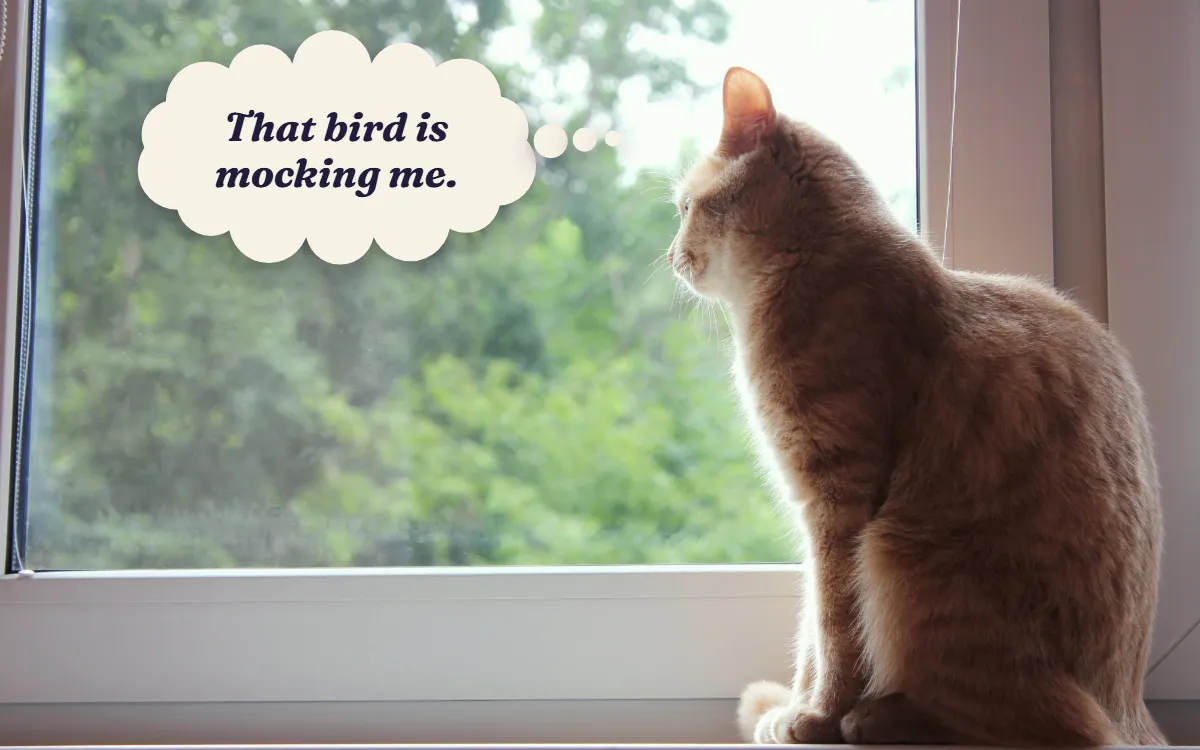
Cats think mostly about their immediate world: their territory, their routine, food, warmth, safety and anything that has changed in their environment. They are present-focused, sensory thinkers who process life through smell, sound and association rather than words. They form real memories and genuine attachments, including to you, their trusted human.
How does a cat's mind actually work?
A cat's mind is built for survival as a small predator who is also, historically, prey for larger animals. That shapes everything about how they think. Cats are intensely tuned to their surroundings, constantly scanning for what is normal and what has changed. A new bag in the hallway, an unfamiliar smell, a sound from next door, all of it gets filed and assessed. This is why cats can seem simultaneously relaxed and alert, dozing one moment and fully switched on the next.
Crucially, cats do not have language, so they do not think in sentences the way we do. Their inner world is sensory: smells, sounds, textures, movements and the feelings and memories attached to them. Scent in particular is central, as cats build a detailed map of their world through smell in a way we can barely imagine. Curious what your own cat is thinking right now? You can scan your cat free and get a playful read in about ten seconds.
Do cats think about their territory?
Constantly. Territory is one of the most important things in a cat's mental life. A cat's home is not just where they live, it is their patch, their kingdom, their safe zone. Much of their day-to-day thinking is about maintaining and monitoring that territory: patrolling it, marking it with scent, checking the boundaries, and keeping an eye on any intruders, such as the cat that keeps strolling across the garden.
This is why cats can be so affected by change. Rearranging furniture, moving house, or a new pet or person entering the home all disrupt the carefully mapped territory a cat holds in their head. What looks to us like fussiness is often a cat working hard to re-establish their sense of a safe, known space.
Is the hunting instinct always switched on?
Very much so. Even the laziest, most pampered house cat carries the full mental toolkit of a hunter. That instinct drives a surprising amount of their thinking and behaviour. The stalking, pouncing, chasing and batting you see in play are the same mental circuits a wild cat uses to catch prey, running whether or not there is anything to actually hunt.
This is why cats are so drawn to movement, from a feather toy to a laser dot to a fly on the window. Their brain is wired to notice and want to chase small, quick, erratic things. It is also why play is so important for a cat's wellbeing. A cat with no outlet for that hunting drive can become bored, frustrated or stressed, so regular play sessions with a wand toy are genuinely good for their state of mind, not just their body.
Do cats think about routine and time?
Cats are creatures of habit, and routine looms large in their minds. While they cannot read a clock, cats have an excellent internal sense of the rhythm of the day, tied to light, activity and their own body clock. This is why so many cats appear at the food bowl at the same time each day, or start pestering you for breakfast with uncanny precision.
Predictability is deeply reassuring to a cat. A stable routine tells them the world is safe and their needs will be met, which lowers stress. When routine is disrupted, by a change in your working hours, for example, many cats become unsettled or vocal. In a real sense, part of what a cat thinks about is what should happen next, and whether it is happening on schedule.
What does my cat think about me?
This is the question every cat owner really wants answered, and the science is reassuring. For a long time cats were unfairly written off as aloof and indifferent. More recent research tells a different story. Studies using the same tests applied to dogs and human babies have found that many cats form a secure attachment to their owner, seeking reassurance from them and using them as a safe base.
So while your cat is not sitting around pondering your day, you are a genuinely significant figure in their mental world. You are a source of food, warmth, safety and companionship, and many cats clearly recognise and prefer their own person. There is even evidence that cats recognise their owner's voice and simply choose whether to respond. In short, your cat thinks of you as an important part of their territory and their sense of security, which, in cat terms, is a lot like love. Want to peek inside their thoughts about you? Scan your cat free and see what comes up.
Do cats remember and feel things?
Yes to both. Cats have strong associative and spatial memory. They remember routes around the home, favourite warm spots, where the food lives, and, importantly, people and experiences. A cat who has had a bad experience with a particular person or situation will often remember and avoid it, while a cat who associates you with good things will seek you out. Their memory is closely tied to survival, so the things that matter most tend to stick.
Cats also clearly experience emotions such as contentment, fear, frustration and affection, even if they do not experience them exactly as we do. They are not the cold, calculating creatures of old myth. They are sensitive, intelligent little animals with rich inner lives shaped by instinct, memory and the bonds they form, including with you.
Frequently asked questions
Do cats think about their owners?
Yes, in their own way. Cats form real attachments and hold a mental map of the people in their territory, including who provides food, warmth and safety. Studies show many cats form a secure bond with their owner similar to that seen in dogs and babies, so you are a meaningful and reassuring part of their world.
Do cats think in words or pictures?
Neither, as far as we can tell. Cats do not have language, so they almost certainly think in sensory terms, through smell, sound, sight, memory and association rather than words. Their world is built largely on scent and pattern, and they connect experiences to feelings and outcomes rather than sentences.
What do cats think about all day?
A lot of a cat's mental life revolves around their territory, their routine and their needs, so they think about safety, comfort, food, warmth, and what is happening in their patch. They are highly present, focused on the here and now, scanning for anything that has changed and anything worth hunting or investigating.
Do cats remember things?
Yes. Cats have strong associative and spatial memory, which is why they remember feeding times, favourite spots, routes around the home and people who have been kind or unkind to them. Their memory is tied closely to survival, so meaningful experiences, good and bad, tend to stick.
Stop guessing. Find out what your pet is really thinking.
Our free AI Pet Mind Reader reads their face and tells you what is going on in there - in about 10 seconds, no sign-up.
Scan my pet free